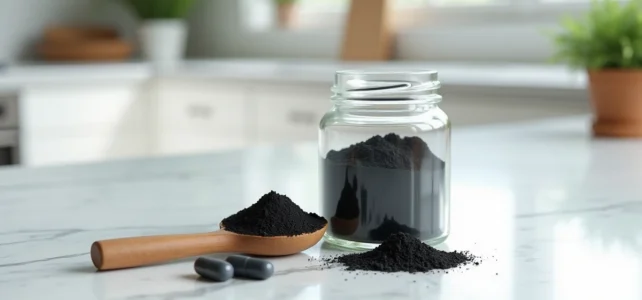
Activated charcoal is on the list of priority medicines deemed essential by the World Health Organization. It is also sold in capsules in wellness aisles, incorporated into toothpastes, and used extensively to filter drinking water. These very different uses rely on a single physical property, adsorption, but their levels of evidence and risks are not the same.
Adsorption of activated charcoal: what porosity captures and what it ignores
Activated charcoal does not absorb anything. It adsorbs: substances attach to its surface without being chemically assimilated. This surface is considerable due to a microporous structure created during activation with steam or chemically.
This adsorption capacity varies according to the size of the target molecules. Intestinal gases and certain toxins attach effectively to the pores of activated vegetable charcoal. Low molecular weight drugs do as well, which poses a major problem in the case of simultaneous intake.
In water filtration, granular activated charcoal retains pesticides, some organic matter, and several compounds responsible for taste or odor. In contrast, nanoplastics (less than one micrometer) do not diffuse into the internal micropores, which significantly limits adsorption on conventional charcoal. For these pollutants, coupling with coagulation and flocculation steps remains necessary, with charcoal then acting as a “polishing” agent downstream of primary treatments.
Better understanding the benefits and dangers of activated charcoal requires distinguishing these contexts of use, as the same product can be beneficial in a controlled medical setting and problematic in self-medication.

Activated charcoal and digestive health: measurable benefits against side effects
The table below contrasts the documented digestive uses of activated charcoal with the associated risks.
| Use | Documented Effect | Main Risk |
|---|---|---|
| Reduction of intestinal gases | Adsorption of gases produced by fermentation | Constipation in case of prolonged use |
| Bloating | Decrease in gas volume in the digestive tract | Intestinal obstruction (rare, high doses) |
| Acute intoxication (emergency) | Rapid capture of the toxic substance if administered early | Ineffectiveness if taken late or on certain toxins |
| Concurrent use with medications | No sought benefit | Marked reduction in drug absorption |
Digestive comfort remains the best-supported benefit for common use. Vegetable charcoal helps reduce excess flatulence, a claim authorized in Europe for dietary supplements containing activated charcoal.
Drug interactions of activated charcoal
The mechanism that makes activated charcoal useful in cases of poisoning is the same that makes it dangerous with daily treatments. Charcoal adsorbs the active ingredients of medications taken at the same time, significantly reducing their effectiveness.
Oral contraceptives, anticoagulants, antiepileptics, and antidepressants are among the most sensitive treatments. An interval of at least two hours between taking charcoal and a medication is the minimum recommendation. For certain treatments with a narrow therapeutic margin, a longer interval may be advised.
Activated charcoal in toothpaste: abrasiveness and limits on enamel
Activated charcoal toothpastes are marketed as whitening. The powdered charcoal effectively removes superficial stains (coffee, tea, tobacco) through mechanical action. Several dental practitioners qualify this benefit:
- The abrasiveness of activated charcoal can wear down enamel in the medium term, especially with vigorous brushing or daily use
- Once the enamel is thinned, the yellower dentin becomes visible, producing the opposite effect of what is sought
- Dental sensitivity increases with enamel erosion, which manufacturers rarely mention
Occasional use, once or twice a week, limits these risks. Prolonged daily use exposes one to irreversible damage to the dental surface.

Drinking water filtration: granular activated charcoal against emerging pollutants
French water unions are commissioning granular activated charcoal filtration units to address emerging pollutants. The objective covers three areas:
- Improve the removal of dissolved organic matter
- Retain emerging pesticides not captured by conventional treatments
- Anticipate regulatory developments on PFAS and pesticide metabolites
Granular activated charcoal is now a key link in new drinking water treatment chains, but it is not sufficient on its own. For per- and polyfluoroalkyl substances (PFAS), complementary technologies are necessary.
In contrast, for domestic filtration (carafes, charcoal sticks), performance remains well below industrial installations. The particle size, contact time, and treated volume differ radically between a binchotan stick in a carafe and a column of granular activated charcoal in a treatment plant.
Activated charcoal in powder or capsules: quality criteria to check
The plant origin of activated charcoal influences its adsorption capacity. Charcoals derived from coconut shells have porosity suited to small molecules, making them effective for digestive use. Charcoals produced from wood or peat have a different pore distribution, more suited for water filtration.
The dosage form also matters. Loose powder offers maximum contact surface but is impractical for dosing and stains. Capsules allow for standardized dosing and avoid direct contact with teeth, limiting the risk of dental abrasion.
A quality activated charcoal mentions its specific surface area and plant origin on the packaging. The absence of this information indicates a poorly traceable product, whose actual adsorption capacity remains uncertain.
Activated charcoal is a powerful adsorbent whose effectiveness entirely depends on the context of use. As a dietary supplement for digestive comfort, it fulfills its role provided a strict interval is maintained with medications. In toothpaste, caution requires spaced use. In water treatment, it remains a technical tool among others, not a universal solution.