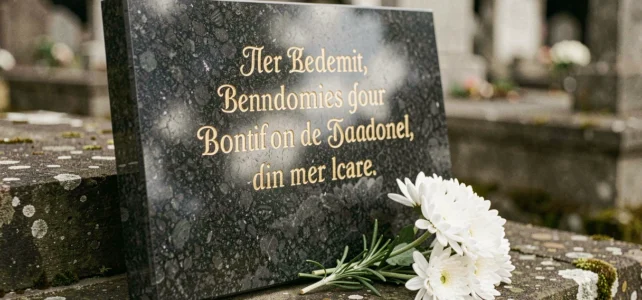
Choosing the words engraved on a gravestone is like setting a final message in stone. This text will be read by loved ones, sometimes years after the passing. A first name, a family connection, a specific memory often suffice to make the tribute more meaningful than a copied quote. Here’s how to construct a personalized gravestone text that truly reflects the deceased person.
Write a personal gravestone text rather than a generic one
Most catalogs offer ready-made phrases. They serve their purpose, but they could appear on any grave. A personal text starts from a concrete detail: a nickname, a shared place, a habit of the deceased.
Let’s take an example. “To our mother, gone too soon” is correct but interchangeable. “Mom, we miss your Sundays in the garden” says something about that specific person. A concrete memory makes the message irreplaceable.
To achieve this, ask yourself a simple question before writing: what moment, gesture, or phrase comes to mind spontaneously when you think of the deceased? This detail becomes the heart of the text. You will also find examples of texts for gravestones that illustrate this personalized approach, starting from the real connection with the deceased.
Naming the relationship remains a strong anchor. “Dad,” “Grandma,” “My brother,” “Our friend” ground the message. Recent formulations tend to favor this direct naming of the connection rather than an abstract evocation of loss.
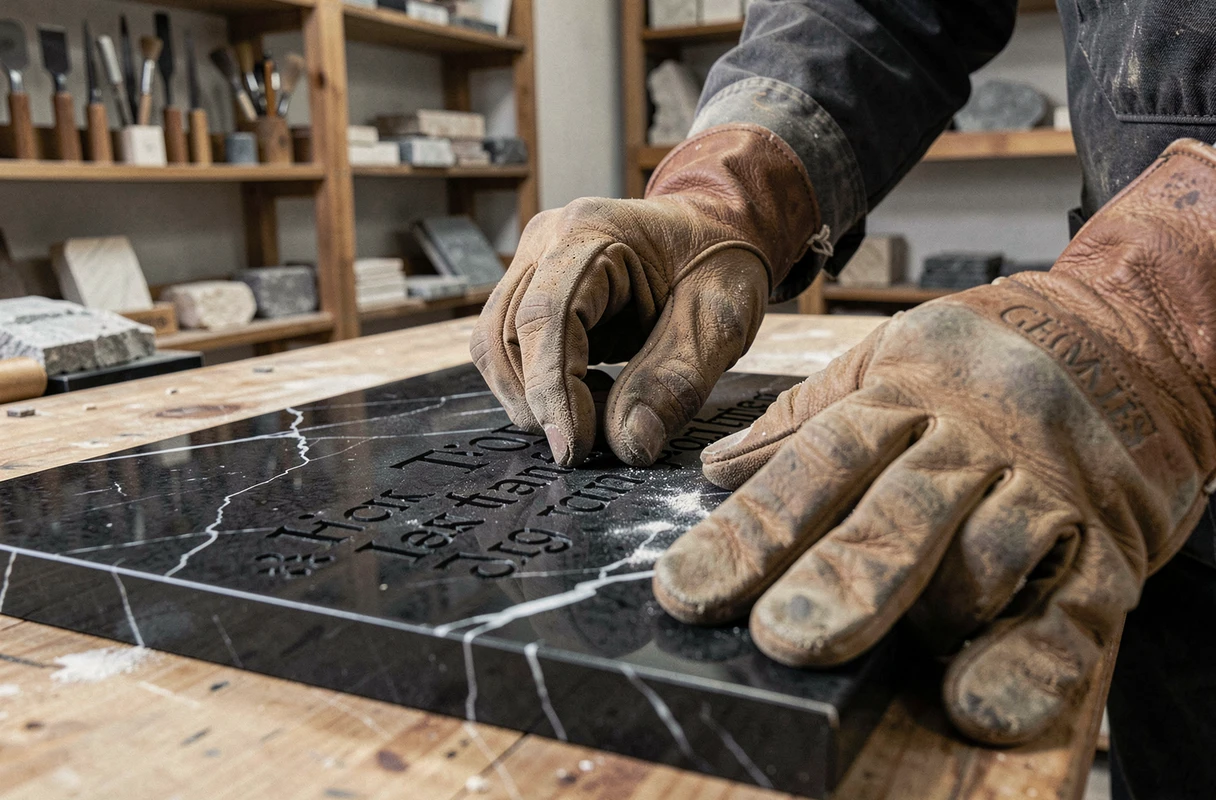
Structure of a gravestone text: the three elements to assemble
A gravestone text is generally built around three elements. You don’t have to use all of them, but knowing them helps structure your message.
The title or address
This is the first line, the one that grabs attention. It can be a simple first name, a family connection (“To our father”), or a direct address (“For you, Marie”). The title sets the tone for the entire message.
The body of the message
This is the heart of the text. It can be as short as a single sentence. Two options work well:
- A personal, short, and visual memory: “You sang every morning; the house is silent without you.”
- A promise or declaration: “Your love accompanies us; we will never forget you.”
- A quote or a line of poetry that resonated with the deceased or the family.
Engraving demands conciseness: on most gravestones, the text does not exceed four or five lines. Every word counts. Read your text aloud. If a word can be removed without losing the meaning, take it out.
The signature
This identifies the author of the tribute. “Your children,” “Your family,” “Those who love you,” or simply a first name. Some families choose not to sign, letting the message speak for itself.
Adjusting the tone of the gravestone according to the relationship with the deceased
The family connection radically changes the tone. You do not write the same way for a parent, a spouse, or a friend. Here are some concrete guidelines.
For a parent (father or mother), the tone oscillates between gratitude and tenderness. “Mom, you taught us patience. It serves us every day.” Acknowledging a legacy, even modest, resonates deeply.
For a spouse or partner, intimacy takes precedence. The use of the second person is natural. “My love, our years together remain my greatest story.” Everyday words are the strongest here.
For a child, the pain is often so acute that simplicity becomes a necessity. “Our little angel, you still light up our nights.” A few words are enough. No one expects a long text in this situation.
For a friend, the tone can allow for more lightness, even humor if it fits the personality of the deceased. “You would have hated this ceremony, but you would have loved the flowers.”
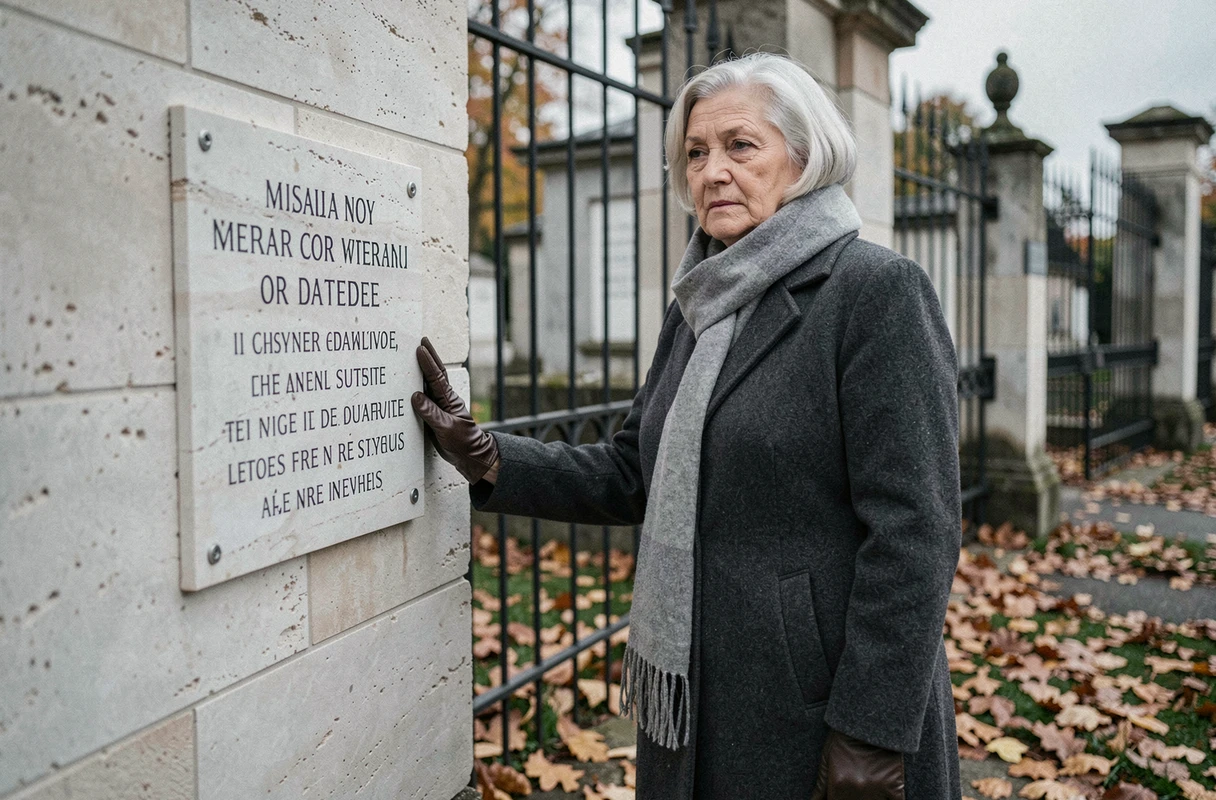
Gravestone: how the medium changes the text
What catalog formulas often overlook is that the medium directly influences the writing. A granite, plexiglass, or bronze plaque does not offer the same constraints.
On a small plaque, stick to two lines. On a larger format, you can include a quatrain or a developed memory. The material also plays a role: some engravings are more readable in capital letters, which necessitates a short text to remain decipherable from a distance.
Another element to consider is the placement of visual elements. If the plaque includes a portrait photo, a landscape, or a symbol related to a passion of the deceased (a musical instrument, a boat, a mountain), the text must coexist with these elements. Reducing the text when the image already speaks avoids overcrowding the plaque.
- Plaque with photo: limit to one to two lines of text maximum.
- Plaque without visuals: you have more space for a developed message.
- Plaque with religious symbol (cross, star, dove): the text can incorporate a coherent spiritual reference.
Common mistakes in gravestone texts
Some clumsiness recurs regularly. Knowing them helps avoid them.
The first is to copy a quote unrelated to the deceased. A line from Victor Hugo is beautiful, but if it resonates with nothing from the life of the departed, it remains decorative. Choose a quote only if the deceased loved it or if it reflects their personality.
The second mistake concerns length. A text that is too long becomes unreadable on stone. Four engraved lines remain a comfortable maximum for most formats.
The third is writing in the heat of immediate emotion without rereading a few days later. The text will remain engraved for decades. Take the time to reread it calmly, or ask a loved one to read it for you.
A personalized gravestone text does not need to be literary. It needs to be true. The first name of the deceased, the bond that united you, a memory that belonged only to you: these three elements, even simply assembled, create a tribute that no one else could have written.