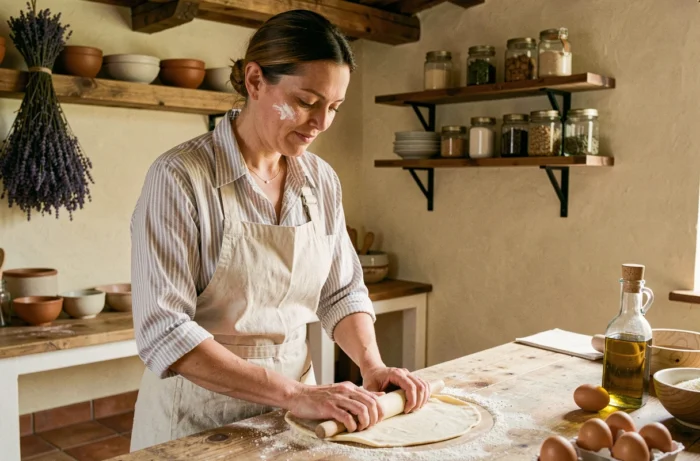
A successful dish does not depend on the complexity of the recipe. It relies on mastering a few technical gestures, choosing the right fats, precisely managing temperatures, and organizing the pantry to avoid waste. Here, we discuss the concrete levers that transform everyday cooking into gourmet cuisine, without extending the time spent at the stove.
Cooking seasonal vegetables: mastering the Maillard reaction daily
The Maillard reaction, the caramelization of sugars and amino acids on the surface, is the first lever of indulgence for a vegetable. To achieve it on a butternut squash or cauliflower, a sufficiently high pan or oven temperature and a dry surface are required. Patting the vegetables dry before cooking and avoiding overcrowding the baking sheet (trapped moisture generates steam instead of browning): these two reflexes change everything.
We recommend cutting vegetables into uniformly sized pieces to ensure even cooking. A butternut cut into regular cubes, lightly oiled and spread out in a single layer, develops roasted nut aromas that a piled-up butternut in a dish will never produce.
Exploring cooking on Yummy Blog allows you to find seasonal vegetable combinations designed for this type of high-temperature cooking, with suitable times and cuts.
Roasting versus sautéing: two different approaches
Oven roasting is suitable for dense vegetables (squashes, beets, parsnips). Sautéing is suitable for high-water-content vegetables (zucchini, mushrooms, peppers). Mixing the two categories in the same container produces a mediocre result: watery vegetables release their juices and prevent dense vegetables from browning.
Quick sauces and sauce bases: the most underestimated shortcut
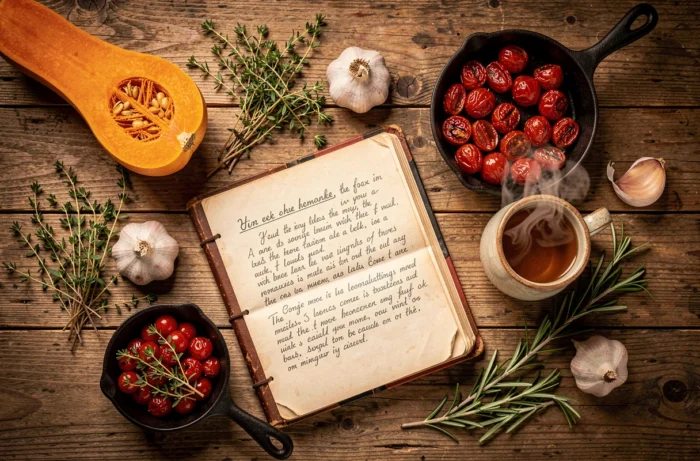
A homemade sauce can be prepared in less than ten minutes and transforms a basic dish into a refined plate. The key lies in the systematic deglazing of the pan after each cooking of meat or vegetables. The caramelized juices at the bottom of the container contain a concentration of flavors that no bouillon cube can replicate.
Deglazing with apple cider vinegar on roasted chicken juices, mounted with a knob of cold butter, creates a tangy and rounded sauce in three minutes. For vegetarian dishes, deglazing with soy sauce on sautéed mushrooms adds umami without the addition of animal protein.
Building a stock of homemade bases
Freezing vegetable or poultry stocks in individual portions eliminates the need for industrial products. The most practical method:
- Store clean peels (carrots, onions, leeks, celery) in a bag in the freezer during the week, then simmer them in water over the weekend
- Strain, reduce the liquid to concentrate the flavors, then pour into ice cube trays
- Unmold the frozen stock cubes and transfer them to a reusable bag, ready to use for any sauce or risotto
This method values preparation waste, a topic that is even more relevant since the obligation of source sorting of bio-waste imposed by the AGEC law since January 1, 2024. Integrating the valorization of peels into your culinary routine reduces waste volume while enriching the flavor repertoire.
Batch cooking recipes adapted to the weekly rhythm
Batch cooking is not about cooking five complete dishes on Sunday. It is about preparing modular bases: a grain (rice, quinoa, bulgur), a legume (lentils, chickpeas), two or three roasted vegetable garnishes, and one or two sauces.
With these components, you can assemble different meals each evening without re-cooking. Lentils become salad on Monday, soup on Wednesday, and pan-fried patties on Friday. The roasted chicken from Sunday transforms into wraps on Tuesday and fried rice on Thursday.
Portion management to limit food waste
Recent recommendations on combating waste distinguish three categories of losses: preparation waste, uneaten food, and plate leftovers. Identifying which weighs the most in your kitchen guides the adjustments.
If your losses mainly come from uneaten food (too large dishes left in the fridge and then thrown away), the solution lies in finer calibration of quantities at the time of preparation. A kitchen scale and graduated containers do more than any anti-waste tip found online.
Seasoning and flavor balance: salt, acid, fat, sugar
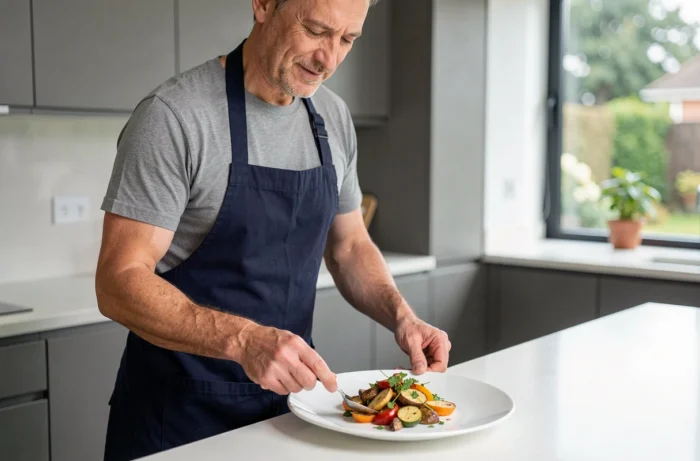
A dish that seems bland rarely lacks salt. It often lacks acidity. A drizzle of lemon juice, a spoonful of rice vinegar, or a few drops of balsamic vinegar on a dish of roasted vegetables awaken the taste buds and enhance existing flavors without adding sodium.
Acidity corrects a dish that is too rich or too flat more effectively than salt. We observe that this rule is still little applied in home cooking, while it is a fundamental principle in professional kitchens.
Fat as a flavor carrier
The aromatic compounds of many spices (turmeric, smoked paprika, cumin) are fat-soluble. Briefly heating them in a fat before adding other ingredients releases their flavor potential. Sprinkling cumin on a dish at the end of cooking does not have the same effect as toasting it for thirty seconds in olive oil at the beginning of preparation.
- Heat the oil over medium heat, add the ground spices, and stir for twenty to thirty seconds until the aroma is released
- Immediately add the onion or garlic to stop the cooking of the spices and avoid bitterness
- Use this aromatic base as the foundation for any stew, soup, or sauce
Toasting spices in fat multiplies their aromatic intensity and gives a simple legume dish a depth comparable to a long-simmered dish.
Everyday gourmet cooking relies on these few mechanisms: dry and hot surfaces for browning, systematic deglazing for sauces, modular bases for the week, and seasoning that plays on acidity as much as on salt. Mastering these gestures makes every meal more satisfying without requiring more time or rare ingredients.


