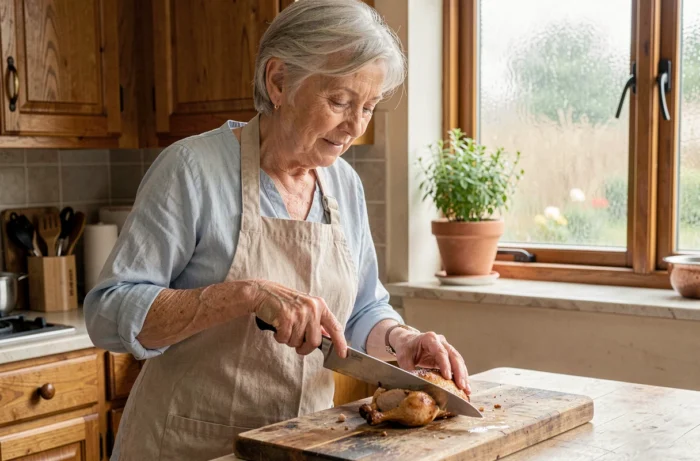
Chicken provides one of the most complete amino acid profiles among common meats, with protein digestibility particularly suited to the metabolism of people over 65. This characteristic makes it a direct lever against muscle mass loss, provided that quantities, cooking methods, and interactions with certain common pathologies in seniors are managed.
Sarcopenia and Chicken Proteins: Revised Guidelines
Sarcopenia remains underdiagnosed despite its impact on functional autonomy after age 70. The PROT-AGE and ESPEN recommendations now emphasize the quality of ingested proteins, not just their overall quantity. Chicken, thanks to its leucine-rich amino acid profile, stimulates muscle protein synthesis more effectively than most plant proteins.
We recommend combining chicken consumption with regular resistance exercises. Without mechanical stimulus, even an adequate protein intake is not enough to slow muscle wasting. A chicken fillet consumed within two hours after resistance exercise improves the anabolic response in older adults.
Popular articles on the benefits of chicken for seniors rarely mention this nutrition-exercise coupling, even though it forms the foundation for sarcopenia prevention according to current geriatric guidelines.
Chronic Kidney Disease: Adapting Poultry Without Eliminating It
In seniors with chronic kidney disease, managing protein intake becomes a delicate balancing act. Reducing protein does not mean eliminating poultry. Chicken has a more favorable phosphorus-to-protein ratio than red meat or certain dairy products, allowing it to remain in the diet even in the intermediate stages of the disease.

The phosphorus in chicken is mostly organic, thus less well absorbed by the intestine than inorganic phosphorus added to processed products. This distinction is rarely explained in nutritional guides for patients. However, it allows chicken to be included in the menu while limiting the renal phosphorus load.
We observe that systematic protein restriction, still practiced by some practitioners, sometimes leads to iatrogenic malnutrition in fragile patients. Chicken, consumed in appropriate portions and without skin, offers a compromise between maintaining muscle mass and nephron protection.
Food Safety of Chicken for Immunocompromised Seniors
The elderly population is among the most vulnerable groups to foodborne illnesses. Recalls of poultry products due to Listeria monocytogenes contamination have increased in recent years, including for cooked or precooked products.
- Cooking thoroughly remains the only reliable barrier against Listeria in poultry. A minimum internal temperature of 70 °C, maintained for at least two minutes, inactivates the bacteria.
- Washing raw chicken under running water, still done out of habit, spreads bacteria through splashing onto kitchen surfaces and increases the risk of cross-contamination.
- Refrigerated cooked chicken dishes (cook-chill type) present an increased risk if the cold chain has been broken, even briefly. For a senior living alone, checking the expiration date and refrigerator temperature becomes a direct preventive action.
These precautions go beyond simple general food hygiene. In an immunocompromised person or someone on immunosuppressive treatment, listeriosis can lead to sepsis or meningitis. The rigor of handling raw chicken deserves as much attention as the nutritional choice itself.
Cooking Methods and Preservation of B Vitamins in Chicken
Chicken is a notable source of B vitamins, particularly B3 and B6, which are involved in energy metabolism and neurotransmitter synthesis. In seniors, a deficiency in B6 affects immune response and cognitive functions.
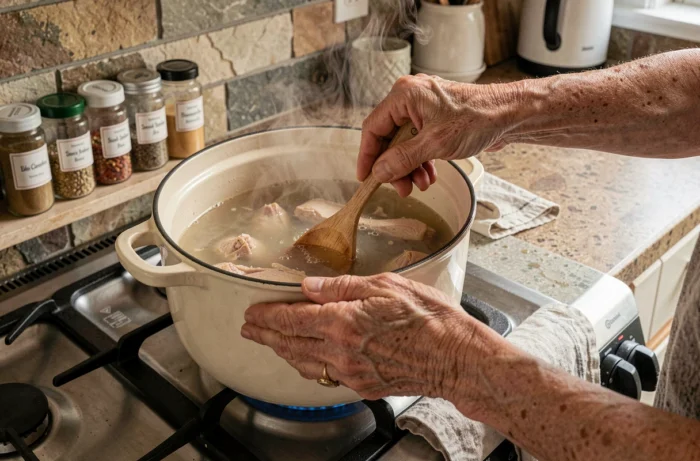
Cooking significantly alters the bioavailability of these vitamins. Long cooking in water (broth, stew) leads to a migration of water-soluble vitamins into the cooking liquid. If the broth is consumed, the loss remains limited. If only the meat is served, a significant portion of the B vitamins is lost.
- Baking at moderate temperatures preserves vitamins better than frying or prolonged braising.
- Short poaching in a small volume of water limits nutrient dilution.
- Steaming remains the most conservative method for preserving the vitamin profile of chicken while providing a tender texture suitable for the chewing difficulties common in seniors.
Favoring gentle and short cooking methods allows for optimal nutritional benefits from chicken without sacrificing food safety. Steamed chicken, cut into small pieces, represents a particularly suitable compromise for those with chewing or swallowing difficulties.
Consumption Frequency and Protein Alternation in Seniors
Incorporating chicken into the diet does not mean making it the exclusive protein source. Alternating between poultry, fish, eggs, and legumes ensures a complete spectrum of micronutrients that chicken alone does not cover, particularly long-chain omega-3s and sufficient heme iron.
We recommend two to three servings of chicken per week, supplemented by fatty fish and eggs. This frequency allows for the benefits of chicken’s favorable protein profile while avoiding dietary monotony, a risk factor for malnutrition in isolated older adults.
Chicken remains one of the most economically accessible animal proteins, an important consideration for seniors with often limited incomes. Choosing a whole chicken rather than processed cuts reduces the cost per serving and limits exposure to phosphate additives used in industrial products.
The role of chicken in the diet of seniors is as much about its nutritional quality as it is about the precautions surrounding it. Mastering cooking techniques, adjusting portions for potential renal pathologies, and maintaining regular protein rotation transforms an ordinary food into a concrete tool for geriatric prevention.


