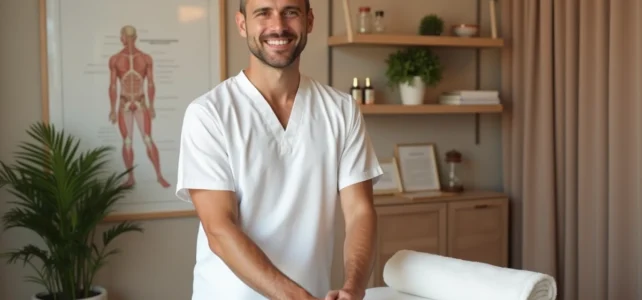
The prostate is a walnut-sized gland located beneath the bladder and in front of the rectum. Prostate massage involves applying pressure to this gland, either internally (rectally) or externally (perineally), for sexual pleasure or in a specific medical context. Behind the growing enthusiasm for this practice, health promises circulate as much as reliable information, and the distinction between the two deserves to be clearly established.
Perineal Stimulation: An Often Overlooked External Approach
The majority of online content describes prostate massage via the rectum. Another, less invasive method exists: external perineal stimulation. The perineum, the area located between the scrotum and the anus, allows for indirect pressure on the prostate through the pelvic floor muscles.
This approach is suitable for men who wish to explore the area without anal penetration. It does not provide the same intensity of sensation as direct contact with the gland, but it has a concrete advantage: the risk of damaging the rectal mucosa is zero.
To practice, simply press firmly with your thumb or two fingers on the perineum, making slow circular movements. The pressure should be gradual. Understand that prostate massage for men primarily relies on a precise knowledge of pelvic anatomy, whether the approach is internal or external.
Prostate Massage and Pleasure: What the Body Really Allows
The prostate is densely innervated. Its stimulation activates nerve endings connected to the pudendal nerve, the same network involved in erection and ejaculation. It is this connection that makes the prostate orgasm possible, described by those who experience it as more diffuse and prolonged than a classic orgasm.
Some men feel nothing during their first attempts. This is not unusual. Prostatic sensitivity varies from individual to individual, and relaxing the anal sphincter takes time. The position of the body also plays a role: lying on the side, with knees drawn toward the chest, the partner or the individual themselves can more easily access the gland, located a few centimeters from the entrance of the anal canal, on the anterior wall.
Dedicated accessories (curved prostate stimulators) are designed to reach this area without forcing the angle of the finger. Water-based lubricant is non-negotiable: the anal mucosa does not produce any natural lubrication, and any friction without an appropriate product risks causing micro-tears.
Medical Use of Prostate Massage: Diagnosis Above All
Prostate massage has a recognized medical use, but it is more limited than many websites suggest. Its primary application in urology concerns the collection of prostatic fluid (also called EPS, for expressed prostatic secretion). This sample allows for the analysis of the presence of bacteria or inflammatory cells in the context of diagnosing certain chronic prostatitis.
This procedure is performed by a urologist during a targeted rectal examination. It is not a comfort care or a regular therapy prescribed to improve prostate health on a daily basis.
What Prostate Massage Does Not Treat
Several online sources attribute curative properties to prostate massage against benign hypertrophy, erectile dysfunction, or even prostate cancer. None of these claims are supported by solid medical evidence. The validated therapeutic use is limited to the diagnosis of chronic prostatitis, not its treatment.
A detail rarely mentioned: it is advised against performing prostate massage in the hours leading up to a urological consultation. Manipulating the gland may distort the results of clinical palpation and potentially alter certain biological markers.
Concrete Precautions and Contraindications for Prostate Massage
Before practicing, certain checks are necessary. Prostate massage is contraindicated in several specific situations:
- Acute prostatitis (active bacterial infection): pressure on the gland can disseminate the infection into the bloodstream
- Presence of inflamed hemorrhoids or anal fissures: digital passage or accessory use worsens the injury
- History of prostate cancer or ongoing suspicion under investigation: any manipulation must be validated by a urologist
Outside of these cases, the practice does not present any particular danger if hygiene is rigorous. Nails should be kept short and filed. Using a latex or nitrile glove reduces the risk of bacterial transmission.
Hygiene and Body Preparation
A light enema before the session is sometimes recommended in specialized guides, but it is not mandatory. A thorough shower and a trip to the bathroom are sufficient in most cases. Communication with the partner remains the most determining factor for a comfortable experience: rhythm, pressure, depth, everything is negotiated in real-time.
- Generously lubricate the finger or accessory before and during stimulation
- Start with gentle pressure on the anterior wall of the rectum, looking for a small rounded mass
- Stop immediately in case of pain, which is never a signal to ignore
Prostate massage lies at the intersection of sexuality and health, two areas where information shortcuts can have real consequences. Its pleasurable dimension is well documented by the nervous anatomy of the pelvic area. Its medical utility, however, remains confined to a diagnostic gesture framed by a professional. Distinguishing these two realities allows for approaching the practice with adjusted expectations, whether the motivation is intimate or related to a health concern.