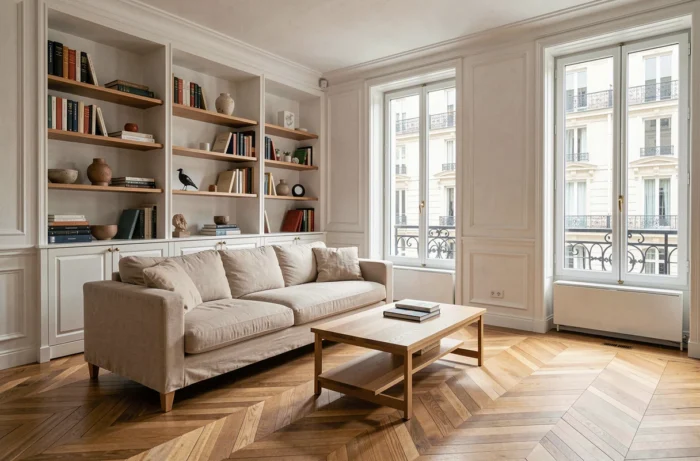
Equipping a rental property is not just about ticking off a list of furniture. Decree No. 2015-981 sets a minimum standard, but legal compliance does not guarantee the real comfort of the tenant or the longevity of the property in a rental market that is tightening its energy requirements. Comparing what the law mandates with what a tenant actually expects allows for measuring the gap between a property that is merely rentable and one that is truly complete.
Gap Between Mandatory Equipment and Tenant Expectations: Comparative Table
Decree No. 2015-981 of July 31, 2015, lists 13 minimum requirements for a furnished rental. This baseline covers basic functions: sleeping, eating, lighting. However, it says nothing about thermal regulation, connectivity, or kitchen ergonomics.
| Item | Legal Requirement (Decree 2015-981) | Common Tenant Expectation |
|---|---|---|
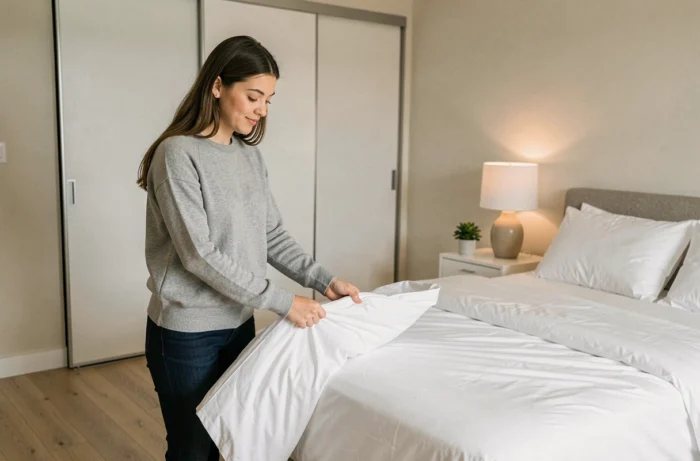
| Bedding | Mattress + duvet or blanket | Comfortable mattress, bed linen provided, quality pillows |
| Light Blocking | Shutters or curtains in the bedrooms | Effective light blocking in all sleeping areas, including the convertible living room |
| Cooking | Cooking plates | Plates + oven or microwave + various utensils (pots, pans, knives) |
| Refrigeration | Refrigerator + freezer compartment | Fridge-freezer of sufficient capacity for the number of occupants |
| Dishes | Dishes + cutlery in sufficient quantity | Complete service (wine glasses, cups, salad bowl, cutting board) |
| Lighting | Functional light fixtures | Adjustable lighting, supplementary lamps in the bedrooms |
| Storage | Storage shelves | Wardrobes with hangers, drawers, suitcase space |
| Heating / Regulation | Not specified in the decree | Regulated heating, proper ventilation, thermal comfort year-round |
| Connectivity | Not specified | Internet access, USB outlets, sufficient power outlets |
The right-hand column reflects what tenants mention in complaints and negative reviews. The most pronounced gap concerns thermal comfort and connectivity, two areas absent from the decree but crucial for satisfaction.
To structure this upgrade beyond the legal minimum, the equipment to be provided with Capitaine Immo allows for covering each item methodically, from the living room to the bathroom.
Energy Performance of Furnished Housing: What the Le Meur Law Changes
Law No. 2024-1039, known as the Le Meur Law, enacted on November 19, 2024, gradually aligns tourist rentals with the energy requirements of primary residences. From November 21, 2024, any newly permitted furnished rental must display an energy performance certificate (DPE) rated from A to E.
This constraint alters the very notion of equipment. A property rated F or G can no longer be offered for short-term rental, regardless of the quality of its furnishings. Thermal comfort becomes a regulatory prerequisite, not a bonus.
The relevant items go beyond a simple list of furniture:
- Double-glazed windows and effective light blocking, which reduce heat loss and improve the DPE rating
- Heating system with regulation (programmable or connected thermostat), more efficient than a basic electric heater
- LED lighting throughout the apartment, which impacts the overall energy consumption assessed by the diagnosis
Competing articles address the list of 13 mandatory items without linking these requirements to the DPE. The Le Meur Law renders this separation obsolete: a landlord equipping their property in 2025-2026 must consider furniture and energy equipment within the same budget.
Kitchen and Bathroom: Areas Where Under-Equipping Generates the Most Complaints
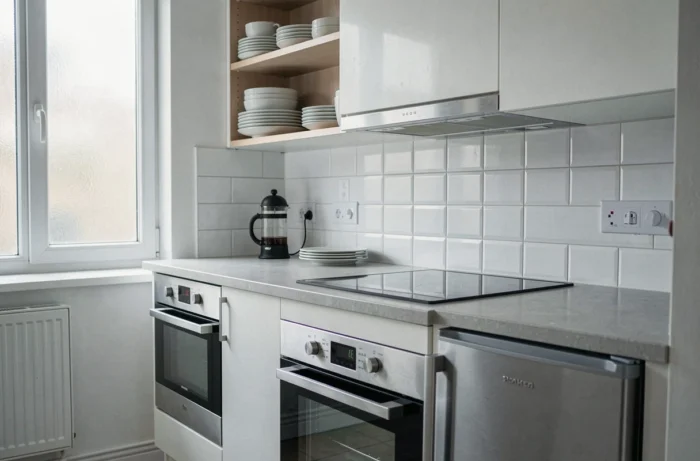
The decree mandates cooking plates, a refrigerator, and dishes. In practice, a tenant who finds a kitchen without a pot, a decent knife, and a cutting board considers the property poorly equipped, even if the law is complied with.
The kitchen contains the highest number of items in detailed inventories: cooking utensils (pots, pans, spatulas), small appliances (kettle, coffee maker, toaster), and basic consumables (sponge, dish soap, trash bag). A complete kitchen inventory far exceeds the three lines of the decree.
The bathroom presents a similar pattern. The decree does not mention any specific equipment for this room. A tenant expects to find at least a mirror, a hairdryer, a towel rack, and a bath mat. In short-term rentals, the absence of these items directly translates into negative reviews.
Co-ownership and Installation Constraints: Limits to Anticipate
Equipping an apartment in a co-owned building does not solely depend on the owner. The co-ownership regulations may restrict the installation of certain equipment: satellite dish on the facade, outdoor air conditioning unit, washing machine without an anti-vibration system suitable for the floor.
Before investing in equipment, checking the co-ownership constraints avoids unnecessary expenses. A real estate agent or manager can consult the regulations and identify the applicable restrictions for the relevant units.
Electrical equipment deserves special attention. An older property with an undersized electrical panel cannot support the simultaneous addition of a dishwasher, a dryer, and an induction cooktop. Having an electrician check the installation’s capacity before equipping the kitchen helps avoid repeated circuit trips and urgent compliance work.
The choice of equipment for a rental property hinges on three levels: compliance with Decree 2015-981, the energy performance mandated by the Le Meur Law, and the comfort level that determines tenant satisfaction. Addressing these three levels separately exposes one to costly oversights. Linking them in a single structured inventory remains the most reliable method for a property that remains rentable and well-rated over time.


