
A successful animation game relies on three technical parameters: the level of energy it mobilizes, the location in which it takes place, and the composition of the group (age, number of participants, relationships among the children). Choosing a game without considering these criteria is akin to launching an activity at random, with the risk of losing the group’s attention within minutes.
Energy Level and Activity Sequencing
The classic trap is to chain several physical games in a row. Children tire quickly, and the end of the animation often turns into chaos or demotivation. A more effective approach is to alternate dynamic games, calm-down periods, and then a short game before snack time.
A running or chasing game (like “tag”) opens the session because it channels the initial excitement. Next comes a calm activity, such as a creative workshop or a collective riddle, which allows the group to rest without disengaging. The last slot, just before the break or the end, works better with a brief and unifying game, such as a short treasure hunt or a timed collective challenge.
This sequencing by energy level applies regardless of the context: birthday, school party, wedding, or leisure center. It is more reliable than selecting children’s animation games solely based on their popularity.

Adapting Animation Games to the Location and Available Materials
The location dictates the range of possibilities much more than age alone. A park allows for throwing games, running, and obstacle courses. A living room imposes static activities or those with limited movement. A party hall offers a middle ground, with space but a floor that restricts certain physical activities.
Outdoor Games Without Equipment
Games without complicated equipment are gaining ground in recent recommendations because they can be launched in under a minute and work with mixed-age groups. Games like “the perched cat,” “tag,” or “the mailman” require no logistical preparation. Less equipment means less downtime between two activities.
Indoor Games and Workshops
Indoors, manual workshops (painting, modeling clay, origami) and cooperative board games take over. Their advantage: they occupy a small group for a predictable duration, making schedule management easier.
- Restricted indoor space (apartment, small room): prioritize charades, riddles, seated creative workshops, board games for small groups
- Open outdoor space (garden, park, yard): races, treasure hunts, collective games like relays or obstacle courses
- Large hall (party room, gym): moderate movement games like “capture the flag,” rotating workshops with multiple stations
Choosing Based on the Occasion: Birthday, Collective Party, or Wedding
The occasion alters the group’s dynamics. A birthday often brings together children who know each other, with a limited number of participants. Light competitive games (egg-and-spoon race, musical chairs) work well because children accept defeat more easily among friends.
A collective party (fair, neighborhood celebration, block party) gathers children who may not know each other. Cooperative games reduce initial awkwardness and avoid the “team against team” effect. A treasure hunt with mixed teams or a large role-playing game (pirates, investigation) creates natural interactions.
At a wedding, children are not the main audience. The animation must function with partial autonomy, requiring little adult supervision. Free workshops (coloring, building, open-access board games) are more suitable than a timed program that demands a dedicated animator for each step.
Number of Players and Age Range: The Two Decisive Filters
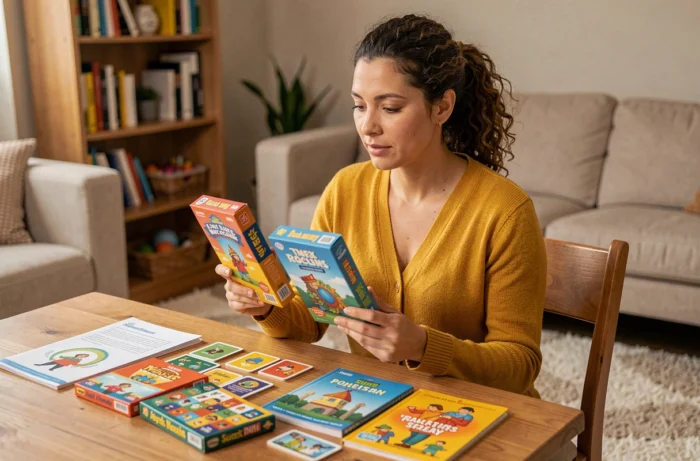
A game designed for six players does not hold up with fifteen participants. The reverse is also true: a large collective game falls flat with four children. Checking the player range before validating a game avoids most failures.
The age range plays a direct role in understanding the rules. Before the age of six, the rules should fit into one sentence. Children at this age respond better to sensory or motor games (obstacle courses, simple ball games) than to games with multiple instructions.
Between the ages of six and twelve, complexity can increase. Light strategy games, treasure hunts with riddles, and team challenges find their audience. Mixing ages in the same group works as long as older children are given a supervisory role, such as team captain or clue reader.
Structuring the Animation: Two Key Moments Are Enough
Planning too many games is a common mistake. Recent guides converge on one principle: two key moments of organized animation throughout the event, surrounded by free breaks, yield better results than an overloaded program.
The first key moment, placed at the beginning of the event, unites the group. The second, before snack time or the end, creates a lasting memory. Between the two, free time with open-access activities (board games, reading corner, coloring) allows children to relax and adults to manage logistics.
- First key moment: unifying collective game (treasure hunt, large themed game, relay race)
- Intermediate free time: autonomous workshops, board games, creative activities
- Second key moment: short and fun challenge (quiz, charades contest, timed trial)
This framework remains the same for a birthday with eight children or a fair with fifty participants. The difference lies in the number of activity stations and the need for adult supervision, not in the overall structure.
Ultimately, the choice of an animation game relies less on the available catalog than on understanding the context: location, energy, group size, occasion. A game perfectly suited for a neighborhood party may fail at a birthday in an apartment. Cross-referencing these parameters before finalizing the program remains the most reliable filter.