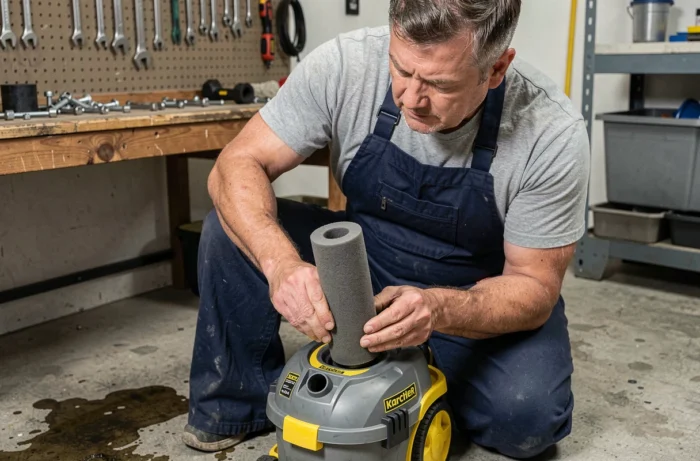
When a Kärcher WD4 loses suction power after a few weeks of intensive use (plaster dust, chimney ashes, sawdust), the problem rarely lies with the motor. It’s the pleated filter, clogged with fine particles, that restricts airflow. Properly cleaning this filter extends its lifespan and restores the tank’s power without needing to buy a new part.
WD4 Pleated Filter: Understanding What Gets Clogged and Why
The cartridge filter of the Kärcher WD4 is a cylindrical pleated filter. Its pleats multiply the filtration surface in a compact volume, but they also create nooks where fine dust accumulates. The finer the dust (ashes, plaster, flour), the more it embeds between the pleats.
On a construction site or after cleaning a chimney, clogging can occur in a single session. It can be identified by two signs: the motor noise increases, and the suction at the nozzle drops significantly. Waiting too long forces the motor to operate under pressure, which reduces its lifespan.
To learn how to clean the Kärcher vacuum filter properly, we distinguish between two situations: regular dry cleaning (after each heavy use) and water washing (periodic, for deep cleaning).
Dry Cleaning the Kärcher WD4 Filter: The Field Method
Dry cleaning is the most common maintenance gesture. Ideally, it should be done at every tank emptying or as soon as the suction weakens.
Remove and Inspect the Filter
Turn off the device and unplug it. Remove the motor head by lifting it. The pleated filter is attached to the central support; it either clips off or unscrews depending on the version. Inspect the pleats: if the dust is gray and powdery, dry cleaning is sufficient. If the pleats are sticky or damp, proceed directly to washing.
Dislodge Dust Between the Pleats
Two techniques work well:
- Controlled tapping: hold the filter above a trash bag and tap firmly but without banging the filter against a hard surface, which would break the pleats. Aim for the sides of the cylinder, not the top.
- Compressed air blowing: direct the nozzle between each pleat, from the inside out. Maintain a sufficient distance to avoid tearing the filter media. Work outdoors, as dust disperses quickly.
- The Kärcher cleaning tool (ref. 2.863-321.0): this dedicated accessory allows you to insert the filter into a housing, then manually rotate it while the vacuum is running. The system combines suction and mechanical agitation to dislodge fine particles without directly handling the pleats, minimizing the risk of damage.
After cleaning, run your hand over the pleats. If they feel smooth and light passes through the media when viewed from the other side, the filter is operational.
Washing the Pleated Filter: When and How to Proceed
Washing is necessary when dry cleaning no longer restores suction or after vacuuming wet or greasy materials. Not all pleated Kärcher filters for the WD range are washable: check the label on your model before rinsing it under water.
Washing Steps
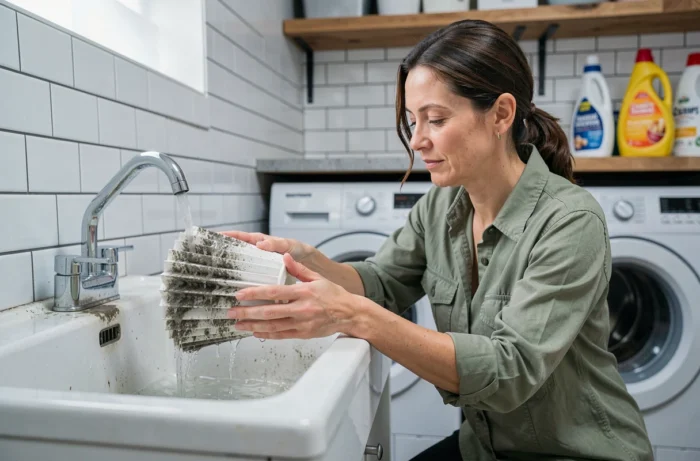
Rinse the filter under a stream of lukewarm water, from the outside in, to push the particles in the opposite direction of their accumulation. No soap, no chemicals, no hard brushes. A gentle pass with your fingers between the pleats is sufficient for stubborn deposits.
Gently shake the filter to remove excess water, then place it upright in a ventilated area, out of direct sunlight.
Drying Time: A Point Many Neglect
Never reassemble a still damp filter in the device. A wet filter blocks airflow, causes the motor to overheat, and promotes mold growth in the tank. The recommended drying time is at least 24 hours in open air. Feedback on this point varies depending on the season and ambient humidity, but it’s better to wait too long than not long enough.
For professionals who use the WD4 daily, having a spare filter allows for rotation between two cartridges: while one dries, the other works.
Signs of Wear: When Cleaning is No Longer Enough and the Filter Needs to be Replaced
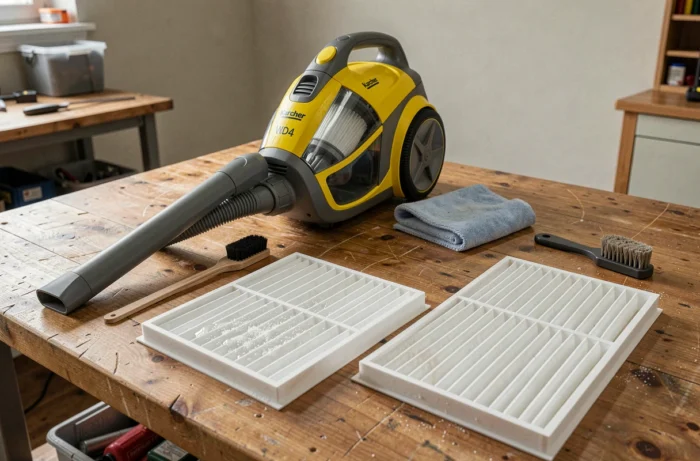
A pleated filter does not have an unlimited lifespan, even with rigorous maintenance. Here are the signals that indicate a replacement:
- The pleats are deformed, sagging, or torn, even partially. A single tear allows fine particles to pass directly to the motor.
- Suction remains weak after a complete wash and 24 hours of drying. The filter media is deeply saturated.
- The filter emits a persistent odor after drying, indicating biological contamination (mold, bacteria).
- The color of the media has uniformly changed and does not lighten during washing.
A new filter compatible with the WD4 is easily found online or at a hardware store. When replacing, also clean the filter support and the inside of the tank with a damp cloth to start with a clean base.
Water and Dust Suction: Adapting Filter Maintenance to the Type of Waste
The WD4 is designed to vacuum both water and dry dust. This versatility imposes a rule often forgotten: remove the pleated filter before vacuuming water. Kärcher provides a foam filter for this purpose, which protects the motor without clogging when in contact with liquid.
If you accidentally vacuumed water with the pleated filter in place, remove it immediately, rinse it, and let it dry for at least 24 hours before reusing it. This is the main cause of prematurely destroyed pleated filters on the WD4.
After vacuuming ashes or particularly fine construction dust, a systematic dry cleaning is recommended before storing the device. Leaving a clogged filter in place between uses hardens the deposits and complicates the next cleaning.