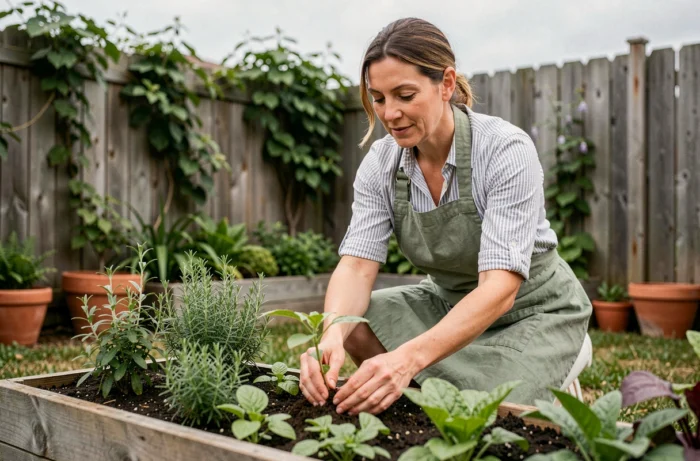
Your tomatoes are producing less, the lawn turns yellow as early as June, and some shrubs refuse to bloom like they used to. These signals are increasingly observed by French gardeners. Everyday gardening is changing because the climate, regulations, and knowledge about soil are evolving rapidly. Instead of listing passing trends, this article delves into three concrete topics that are already changing the way we cultivate.
Synthetic rooting hormones: the planned end and its alternatives
Have you ever dipped a cutting in a white powder before planting it? This simple gesture relies on indolebutyric acid, a synthetic hormone that accelerates root development. Since 2019, these powders have been classified as phytosanitary products and fall under the Labbé law.
Their announced disappearance from retail shelves around 2026 requires a change in method. Three natural solutions work and do not require any purchases from garden centers.
- Willow or osier water: soak freshly cut willow branches in water for two days. The resulting liquid contains salicylic acid, a natural root stimulant. Dip your cuttings in it before planting them.
- Unpasteurized honey: apply a thin layer to the base of the cutting. Its antiseptic properties protect the cut while promoting rooting.
- Poplar soaking water: same principle as willow. Poplar stems release auxinic compounds that encourage root formation.
These techniques require a bit more patience. The success rate varies by species, but for common shrubs (roses, hydrangeas, lavenders), the results are comparable to those of synthetic powders.
Gardeners who follow the news on the Spot Jardin site regularly find detailed guides on these chemical-free propagation methods.
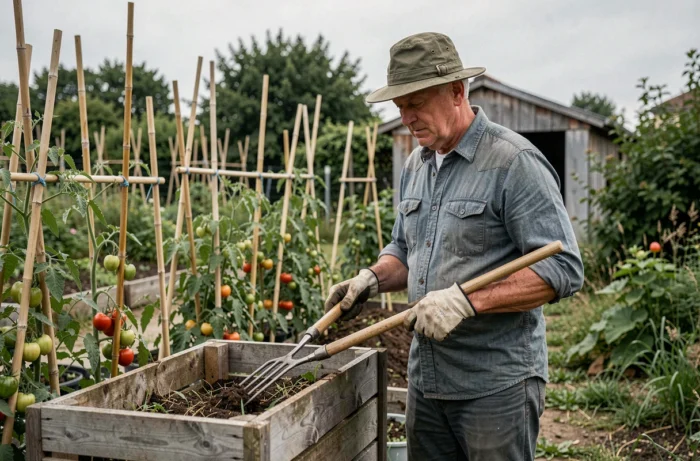
Prohibited herbicides in France: what the law really allows in 2026
Confusion still reigns over what an individual can use in their garden. Let’s go over the facts, in order.
Diesel is prohibited as a herbicide since 2010. Despite this, the practice persists in some rural areas. Pouring fuel on the soil pollutes groundwater and kills microfauna. Fines exist, and so do health risks.
In 2019, the Labbé law banned all synthetic phytosanitary products for individuals on their private spaces. Glyphosate, selective herbicides for lawns, chemical moss killers: everything is affected.
Extension to private places receiving the public
Since 2022, the ban extends to condominiums, campsites, guesthouses, and hotels. If you manage a garden in a residence with common areas, chemical treatments are prohibited there.
White vinegar remains, often presented as the miracle alternative. It does burn the leaves, but does not reach the roots of perennials. On a gravel path, it may suffice. On a well-rooted dandelion, you’ll need to repeat the process every two weeks.
Truly effective alternatives are mechanical: hoe, oscillating weeder, weeding knife. Thermal weeding (flame or steam) destroys aerial parts without chemical residue. Thick mulching remains the best prevention against weeds, provided a sufficiently dense layer is applied.
Living soil and water conservation: two practices linked to sustainable gardening
Have you noticed that some gardens stay green in the middle of summer without intensive watering? The difference rarely lies in the variety planted. It lies in the soil.
A soil rich in organic matter retains more water than bare or compacted soil. It’s a simple principle: microorganisms (earthworms, fungi, bacteria) create a porous structure that acts like a sponge.
Nourishing the soil rather than the plant
The classic reflex is to apply fertilizer directly at the base of the plants. The “living soil” approach reverses the logic: we first nourish the soil, which then nourishes the plant.
In practical terms, this involves three actions:
- Never leave the soil bare. Cover with organic mulch (dead leaves, branch chippings, straw) or sow a green manure between crops.
- Reduce soil work. Avoid turning the soil with a spade, which destroys mycorrhizal fungal networks. A simple pass with a broadfork is enough to aerate without disturbing the layers.
- Compost on-site. Instead of centralizing a composter, deposit green waste directly at the base of the plants in a thin layer. Surface composting mimics the natural cycle of the forest.
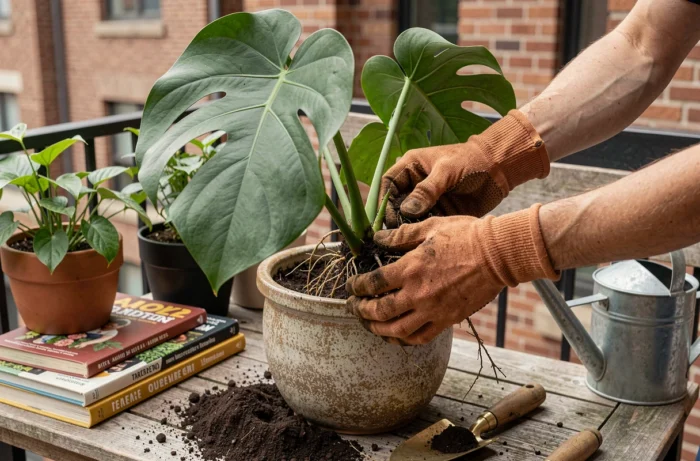
Watering: target frequency rather than volume
Abundant but spaced watering encourages roots to grow deep. In contrast, light and daily watering keeps roots near the surface, making the plant dependent.
Watering twice a week deeply is better than every day at the surface. Morning remains the best time: less evaporation, less risk of fungal diseases.
Oyas (buried clay pots) and programmed drip irrigation can significantly reduce water consumption. These systems deliver water directly to the roots, with no loss through runoff.
Local varieties and drought-resistant plants
Rather than fighting against the climate, more and more gardeners are adapting their plant choices. Local and heirloom varieties, selected over decades in a given terroir, tolerate the conditions of their region of origin better.
For the vegetable garden, prioritize reproducible farmer seeds. They are cheaper in the long run since you save your own seeds from one season to the next.
Ornamental grasses and Mediterranean perennials (lavender, rosemary, yarrow, gaura) are gradually replacing water-hungry annuals in flower beds. They require little maintenance once established and attract pollinators.
Classic lawns, heavy consumers of water and mowing energy, are giving way to persistent ground covers like creeping thyme or dwarf clover. These alternatives stay green longer in summer and require only two to three mowings per year.
Everyday gardening in France is transforming under the combined effect of regulations on phytosanitary products and adaptation to the climate. The gardeners who best succeed in this transition are those who observe their soil before looking at a plant catalog.